
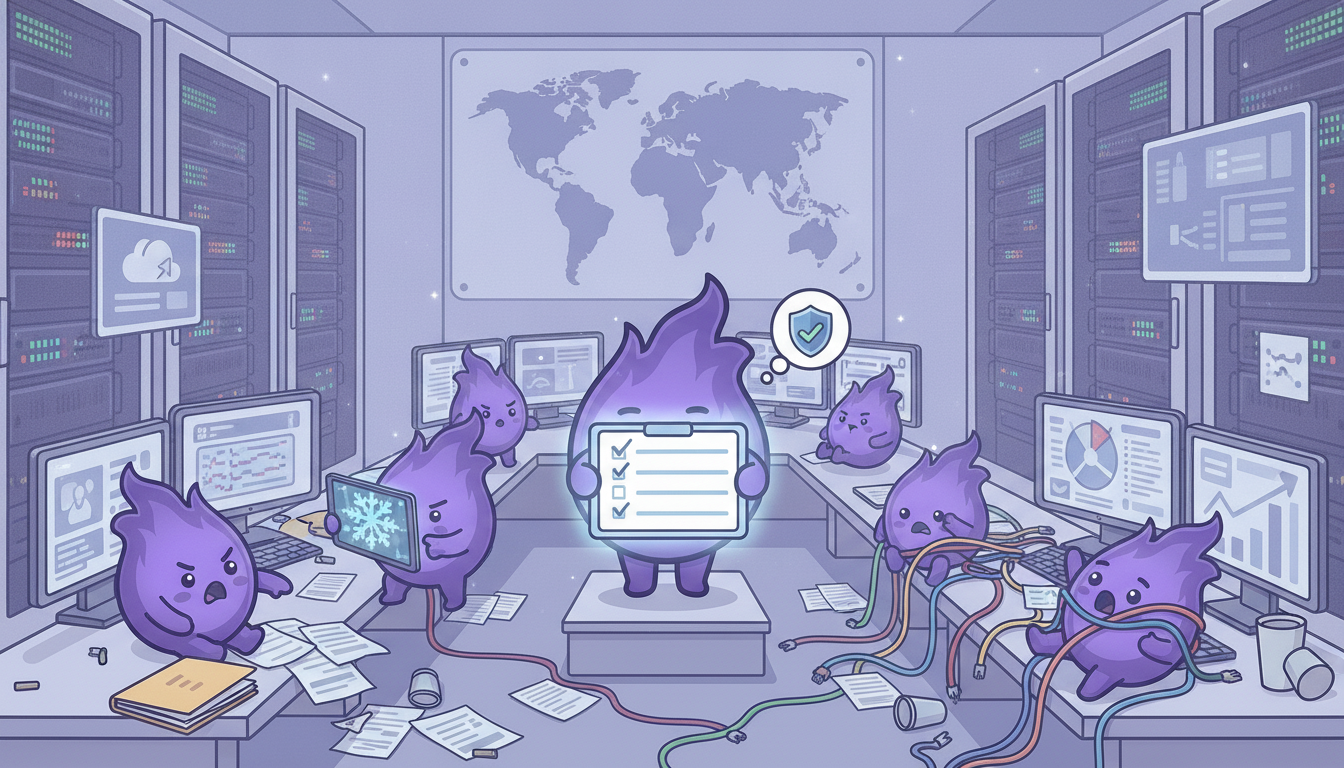
Data collection nightmares in clinical and nutritional research: the researcher's guide
Talk to researchers running clinical or nutritional studies and a familiar set of frustrations comes up again and again. Many describe setups that were too limited, too fragile, or too complex to allow them to do their work to the standard they knew it deserved. Nutritional studies face a version of this that's often underestimated: dietary and behavioural data is inherently messier than a lab value, and a data collection system built around the assumptions of a drug trial rarely fits without real friction.
The gap between intent and execution
Data collection in human research needs to be accurate, timely, trustworthy, and securely stored. Those are not especially controversial requirements. What is surprising is how often the methods available to researchers fall short of all four at once.
A brief history of the problem
Paper-based methods have real advantages: they work without technology, most participants can use them, and they impose no particular infrastructure requirements. But they come with consistent failure modes:
- Illegible handwriting, ambiguous marks, and unclear corrections
- No validation at the point of entry
- Documents lost in transit
- The need to transcribe everything digitally afterwards
That last point is where the costs compound, and it's no longer just an intuition. A randomised controlled trial directly comparing electronic and paper case report forms for the same clinical data found electronic entry was significantly faster (8.29 minutes on average versus 10.54 for paper), with an additional 5.16 minutes per form saved when patients entered their own answers directly rather than having them transcribed from paper afterwards. Data integrity told the same story even more starkly: zero data entry errors in the electronic condition, versus three in the paper condition, in a trial designed specifically to measure the difference. Multiply either number, the time or the errors, across every form in a full study and the case for reducing manual transcription stops being a preference and starts being an operational argument.
Digital solutions: progress, but not a clean fix
Electronic data capture at source solves many of the paper problems. Validated fields, required entries, dropdown menus, and type restrictions prevent most of the common errors before they happen, consistent with what the trial above found.
But digital solutions have introduced their own frustrations:
- Platforms that do not integrate with each other, requiring manual data transfers between systems
- Poor user interfaces that staff and participants struggle with
- No support or documentation when things go wrong
- IT requirements that academic teams cannot meet internally
- Security arrangements that do not meet regulatory standards
- License costs that exceed research budgets
Where all-in-one platforms fit
Platforms that combine eConsent, ePRO, EDC, randomisation, recruitment, and retention tools into a single system address several of these problems simultaneously. Fewer separate logins, better data coherence, and single-vendor accountability for security and compliance are genuine advantages.
The catch is complexity. An all-in-one platform that is difficult to use replaces multiple small problems with one large one. The quality threshold for the user experience is higher, not lower, precisely because so much depends on it.
What researchers say they actually need
Across conversations with research teams working in both clinical and nutritional settings, a consistent picture emerges:
- Fewer platforms, not more. Platform proliferation creates security risk, coordination overhead, and confusion
- Systems that integrate without manual intervention
- Interfaces that non-technical staff and diverse participant populations can use without training
- Human support available when it is needed
- Security that meets regulatory standards without requiring internal IT expertise
- Pricing that is realistic for academic and smaller research teams
The comparison in numbers
| Approach | Speed | Data integrity | Main risk |
|---|---|---|---|
| Paper CRF | Slower (10.54 min average, per trial data above) | Lower (3 errors observed in a controlled comparison) | Illegibility, loss, transcription delay |
| Electronic CRF | Faster (8.29 min average) | Higher (0 errors observed in the same comparison) | Integration gaps, platform proliferation |
| All-in-one platform | Fastest in principle, if well designed | Highest in principle, via single-source data | Complexity if the interface itself is poor |
The theme is not that technology cannot help. The trial evidence is fairly unambiguous that it does. It is that the gap between what researchers need and what most available tools provide is still wider than it should be, and that gap tends to show up as friction and workarounds long before it shows up as a data quality problem anyone can point to directly.