
Remote booking tools and eConsent workflows
Participant onboarding is often where decentralised trials lose momentum. The problem is rarely the volume of documents. It is fragmentation: different emails, different platforms, scheduling back-and-forth, expired login links, and inconsistent instructions from multiple people. By the time a participant has read three emails and still does not know when to expect a call, some of them have already quietly moved on. None of that drop-off shows up as a clean, attributable metric anywhere. It just quietly reduces the enrolment numbers a study reports, without ever being labelled as a consequence of clunky onboarding specifically.
What remote booking tools actually solve
A self-serve booking system removes the main scheduling bottleneck. When participants can:
- Select a screening appointment from a live calendar
- View time slots adjusted to their own time zone
- Receive automatic confirmations and reminders
...they are more likely to show up, and the study team spends less time coordinating over email. Fewer manual steps means fewer places for things to go wrong.
The bigger impact is often on perception. A participant who can book an appointment themselves feels more in control of the process. That initial sense of confidence carries into the study, and it's a genuinely different starting posture to the one created by a participant who's spent a week chasing down a coordinator to find a time that works, before the study has even properly begun.
Connecting booking to eConsent
The handoff from booking to consent is where many studies lose participants who were already engaged. The two should be connected, not sequential gaps separated by waiting time. There's a reasonable evidence base for treating eConsent itself as a genuine improvement here rather than just a digital copy of a paper form. A systematic review covering 37 publications and over 13,000 participants compared eConsent directly against paper-based consenting and found that not one included study showed paper performing better on comprehension, acceptability, or usability. Among the highest-quality studies, eConsent produced significantly better understanding and higher satisfaction. If the booking-to-consent handoff is well designed, it isn't just a convenience improvement. It's connecting participants to the consent format the evidence actually favours.
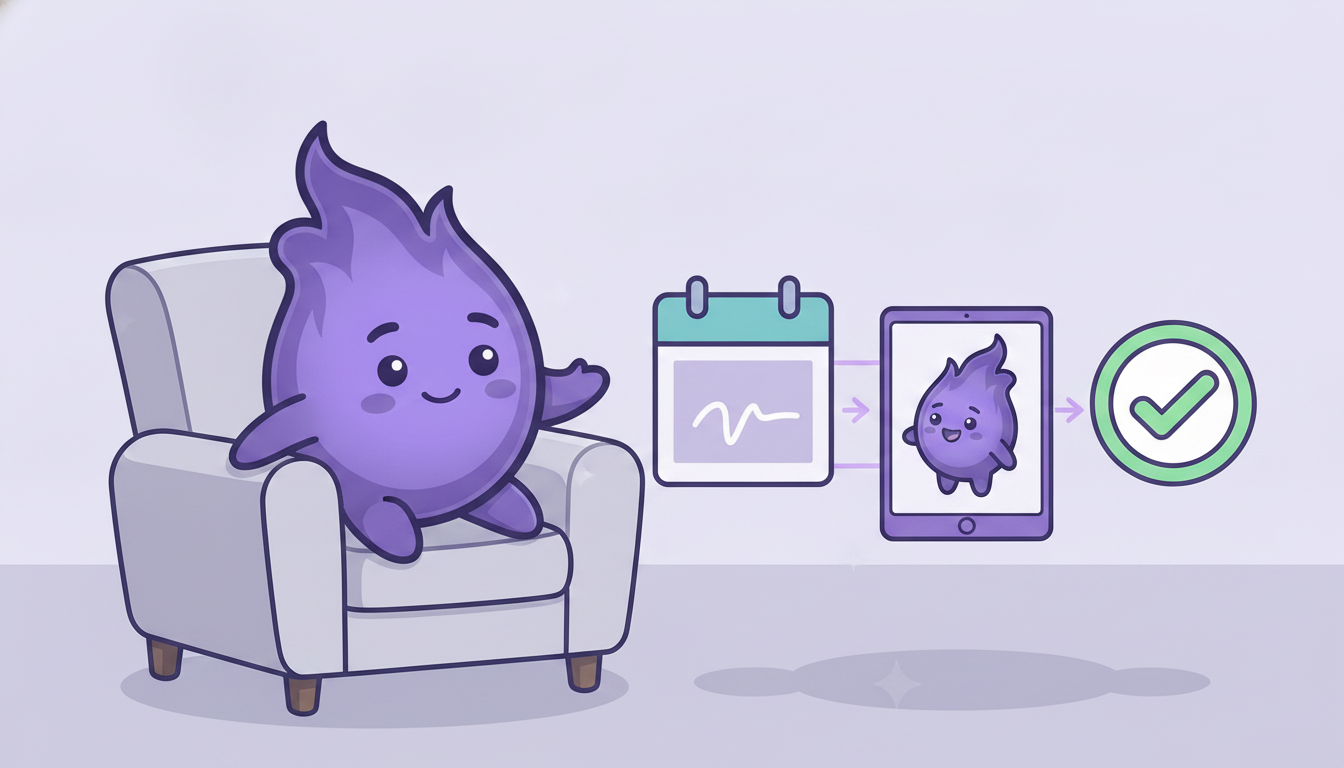
A well-designed onboarding flow looks something like this:
- Participant receives a study invitation and clicks through to a screening questionnaire
- On eligibility confirmation, they are immediately directed to available appointment slots
- Booking confirmation includes access to consent materials in advance
- After the appointment, digital signing gives them immediate access to the study app or portal
Each step flows into the next without requiring manual outreach or waiting for someone to send the right link. Staff attention is freed for the conversations that actually matter: answering questions, addressing hesitation, and building the relationship with the participant.
One detail from the eConsent research is worth designing around specifically: the same review found that eConsent tended to take participants a little longer to complete than paper, which the researchers read as a sign of deeper engagement with the material rather than a flaw. A booking-to-consent flow that's optimised purely for speed risks undermining the exact quality that makes eConsent worth using in the first place. Fast handoffs between steps are good. A consent step itself that's rushed for the sake of a slicker-looking funnel is not.
Where this approach makes the most difference
Integrated booking and eConsent workflows work well across many study types, but tend to have the greatest impact in:
- Observational and nutritional studies with high participant volume
- Direct-to-participant data collection where there is no site to handle local coordination
- Early-phase digital health studies where speed of setup matters
In more complex interventional trials, these systems still reduce administrative friction even if they do not replace every clinical conversation. The question is not whether to use them, but where in the workflow they add the most value, and where speed should give way deliberately to depth.
A useful way to audit an existing onboarding flow is to walk through it yourself, end to end, as if you were a genuinely uninformed participant seeing it for the first time. Count the number of separate emails, logins, and platforms it takes to get from initial interest to a completed consent. Every one of those handoffs is a place someone with less patience, or a worse internet connection, or a busier week than you have right now, could quietly disappear.