
Resource management and capacity planning for trial sites
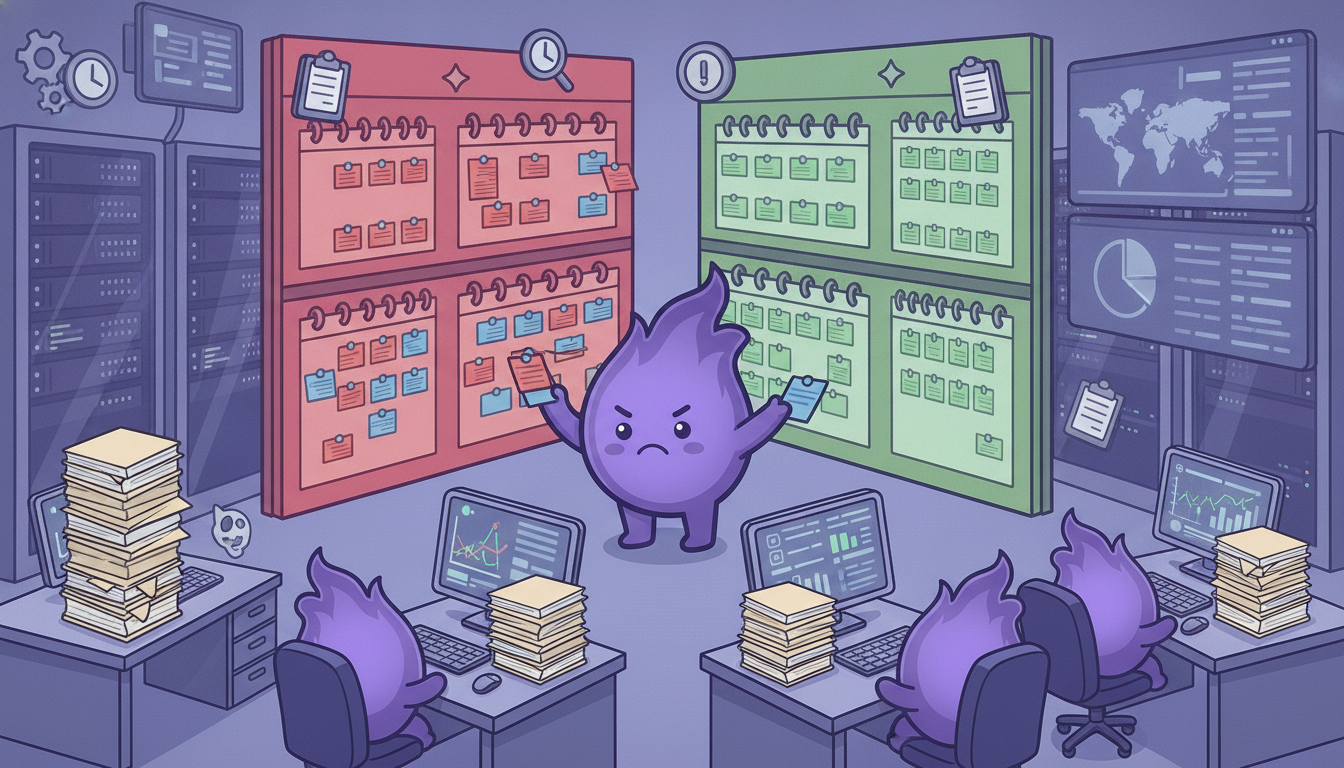
Ask a site how much capacity it has for a new study, and the honest answer is usually a guess dressed up as a number. Most sites plan around a rough count of active protocols, on the assumption that studies are roughly interchangeable units of work. Recent work on resource management and capacity planning for trial sites pushes back on that assumption directly: studies are not interchangeable, and treating them as though they are is a common reason sites end up overcommitted without anyone quite noticing until it's too late.
Why "how many studies" is the wrong question
A site running three studies with straightforward visit schedules and stable enrolment can have real spare capacity. A site running two studies, one of which involves complex behavioural interventions, frequent unscheduled visits, and heavy documentation requirements, can be fully saturated. Counting protocols instead of actual workload hides this difference completely, right up until a site accepts a fourth study it genuinely cannot support without cutting corners somewhere.
The more useful unit of measurement is closer to coordinator hours per participant per week, factoring in protocol complexity, visit frequency, and the amount of manual data handling each study requires. That number varies enormously between studies that look similar on paper.
What drives the real difference in demand
A handful of protocol characteristics consistently predict how much genuine capacity a study consumes, independent of headline visit count:
- Behavioural or lifestyle interventions typically require more coordinator contact time than a straightforward pharmacological comparison, because adherence support and troubleshooting are ongoing rather than front-loaded at enrolment.
- Industry-sponsored studies often carry heavier documentation and monitoring burdens than investigator-initiated ones, reflecting sponsor-side compliance requirements that don't necessarily map to participant-facing visit count.
- Protocols with frequent unscheduled contact points, missed-dose follow-up, symptom check-ins, ad hoc queries, are harder to plan around than ones with a fixed visit schedule, because the workload isn't predictable week to week.
- Studies collecting data from multiple sources, wearables, ePRO, lab results, manual entry, that a coordinator has to reconcile by hand add administrative overhead that rarely shows up in a protocol's stated time commitment.
Two studies with the same visit count, illustrated
The clearest way to see why counting protocols fails is to compare two hypothetical studies that would look identical on a headcount-based capacity spreadsheet, both with, say, monthly visits over twelve months, both enrolling around thirty participants at this site.
| Study A: pharmacological comparison | Study B: behavioural intervention | |
|---|---|---|
| Visit schedule | Fixed monthly visits | Fixed monthly visits, plus frequent unscheduled adherence check-ins |
| Data sources | Single eCRF, entered at each visit | eCRF, ePRO, and a wearable device feed, reconciled manually |
| Documentation burden | Standard monitoring requirements | Heavier sponsor-side compliance documentation |
| Coordinator contact pattern | Front-loaded at enrolment, then light | Ongoing throughout, troubleshooting adherence issues as they arise |
| Genuine weekly coordinator hours | Comparatively low and predictable | Substantially higher and less predictable week to week |
On a spreadsheet that only counts "two studies, thirty participants each," these look interchangeable. In practice, a coordinator carrying both is absorbing a workload that a headcount model has no way of representing, right up until something gives, usually query resolution time or monitoring thoroughness, quietly, before anyone flags it as a capacity problem rather than an individual performance issue.
What planning around real workload actually enables
A site that tracks capacity at this level of granularity can make decisions a headcount-based model simply can't:
- Decline or delay a study honestly, with evidence, rather than accepting it and discovering the strain three months in.
- Match specific coordinators to specific studies based on actual demand profile, rather than round-robin assignment that ignores complexity.
- Flag understaffing before it shows up as data quality problems. A site running at capacity tends to show the strain first in slower query resolution and looser monitoring adherence, both of which are catchable early if anyone's actually watching the workload number rather than the study count.
- Negotiate more realistic study budgets and timelines with sponsors, backed by an actual model of what the study demands rather than a rough estimate.
The connection to data quality
This isn't only an operational efficiency question. An overstretched site is a site more likely to have queries pile up, documentation fall behind, and monitoring visits get rescheduled repeatedly. None of these show up immediately as a crisis. They accumulate quietly until a database lock reveals exactly how much loose data quality was building up underneath a workload nobody had properly measured.
Better capacity planning doesn't eliminate the pressure sites are under, more studies, tighter timelines, and higher documentation standards aren't going away. What it does is make the pressure visible and manageable rather than something a site only discovers it's failed to absorb after the fact. A site that can say, with real numbers, "we don't have capacity for this study without cutting into another one," is in a stronger position than one that finds out the hard way, three studies and one overwhelmed coordinator later.