
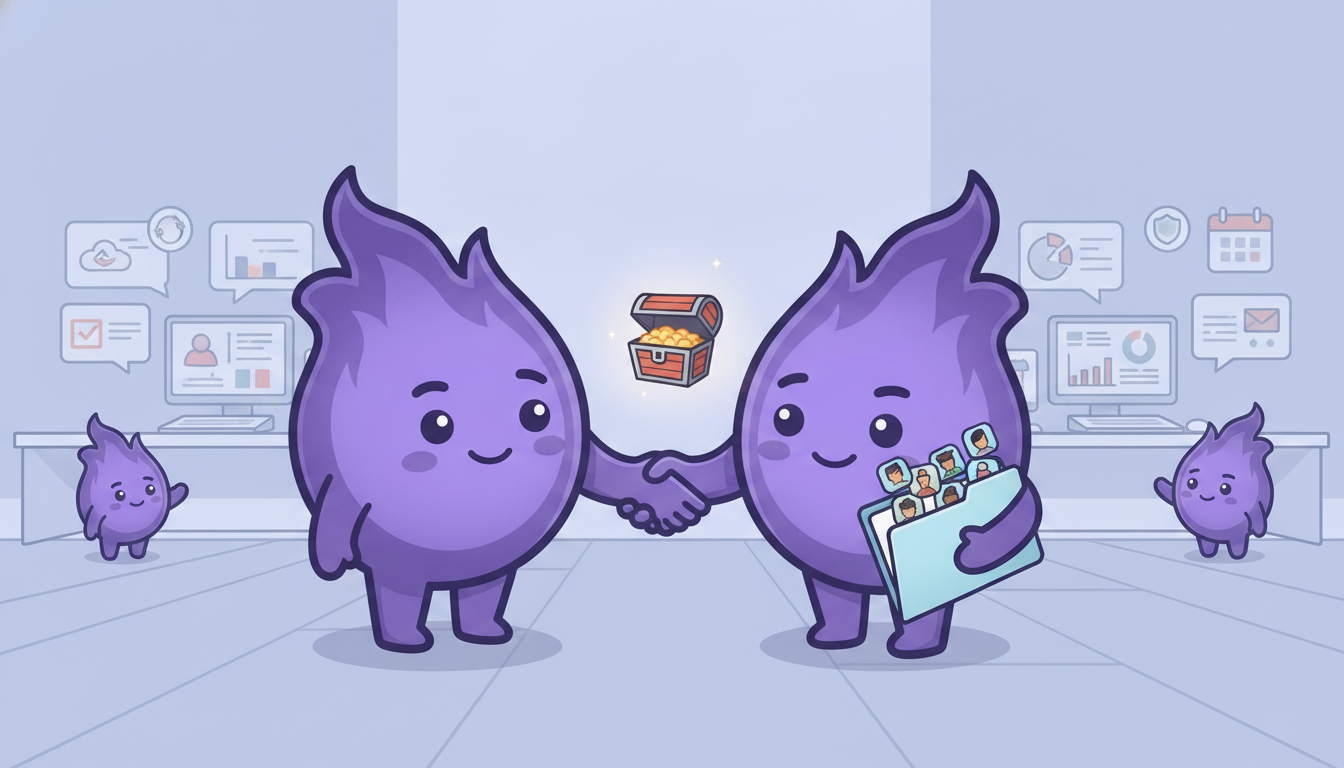
Trial secret weapons: the recruitment company
Something shifted in participant recruitment after COVID-19. People began questioning how much they needed to do in person when the alternative was available. Sponsors responded, and decentralised and hybrid trials expanded accordingly. But this shift also changed local recruitment dynamics. Having a study site with good walk-in traffic is no longer the guarantee it once was.
What has grown in its place is the specialist recruitment company: organisations with pre-built pools of willing, vetted participants who are actively looking for studies to join. For sponsors used to relying on a handful of site relationships built up over years, this can feel like an unfamiliar way to fill a study, but the underlying logic is straightforward: recruitment is a specialised skill, and a company that does nothing else tends to be better at the specific mechanics of it than a site whose primary job is clinical care.
The power of a warm start
When you partner with a recruitment company, you are not starting from zero. Their participants have either taken part in research before or have specifically signed up to be contacted about future studies. That pre-existing motivation matters, and it addresses a documented weak point in the recruitment funnel directly.
A monitored enrollment study for a Veterans Affairs and NIH trial found that even among patients who had already been identified as potentially eligible, only 65.7% actually enrolled, with impediments to informed consent alone excluding over a fifth of otherwise eligible people. That's a meaningful loss happening after the hard part of finding eligible candidates was already done. A pre-screened, already-informed participant pool is specifically designed to reduce exactly that kind of drop-off, since much of the consent friction and unfamiliarity that causes it has already been addressed before the study even opens.
Working with an engaged, pre-screened pool typically means:
- Target enrolment can move faster because pre-screening has often already been done
- Participants arrive with a basic understanding of what research participation involves
- The study team spends less time on early education and more time on engagement
Engagement that actually sticks
Keeping participants involved when you never see them in person is one of the real challenges of remote trials. This is where recruitment partners often add more value than just finding people.
Many do not just refer and step away. They maintain relationships with their participant pool: running check-ins, troubleshooting technical issues, and supporting retention through the duration of a study. That kind of ongoing engagement can translate directly into lower dropout rates and cleaner data.
More than just referrals
Some recruitment companies also offer operational services that act as an extension of the study team:
- Handling consent calls with pre-qualified participants
- Conducting pre-screening interviews to confirm eligibility
- Shipping welcome kits or biological sampling materials
- API integration so study systems can pull from their participant pool in real time
If you have solid technology in place and a recruitment partner with integration capability, you can get a live sense of participant availability for your specific inclusion and exclusion criteria before you even open for enrolment.
When it makes sense to use one
You may not need an external recruitment partner if you have an established site with a strong local pool or if your study is highly localised.
But if you are:
- Running a virtual or hybrid study with no local recruitment base
- Enrolling a niche or hard-to-find population
- Expanding into a new region or country
- Under pressure to hit enrolment milestones quickly
...then a recruitment partner can be the difference between a scrambled launch and a smooth one.
What to actually check before signing
Not every recruitment company delivers the same value, and the difference usually isn't in the size of their participant pool. Ask specifically how they handle the consent-related drop-off documented in the research above: do they provide genuine pre-consent education, or just a contact list of people who ticked a box saying they're interested? A pool of names is not the same thing as a pool of people who understand what they're being asked to do, and the gap between the two is exactly where the enrollment losses in that VA/NIH study concentrated.
It's also worth asking how they measure their own performance. A recruitment partner who can show you their historical enrolment-to-referral ratio, broken down by therapeutic area or study type, is telling you something concrete about how they actually perform under conditions similar to yours. One who can only offer general assurances about the size of their database is asking you to take the harder, more important numbers on faith.