
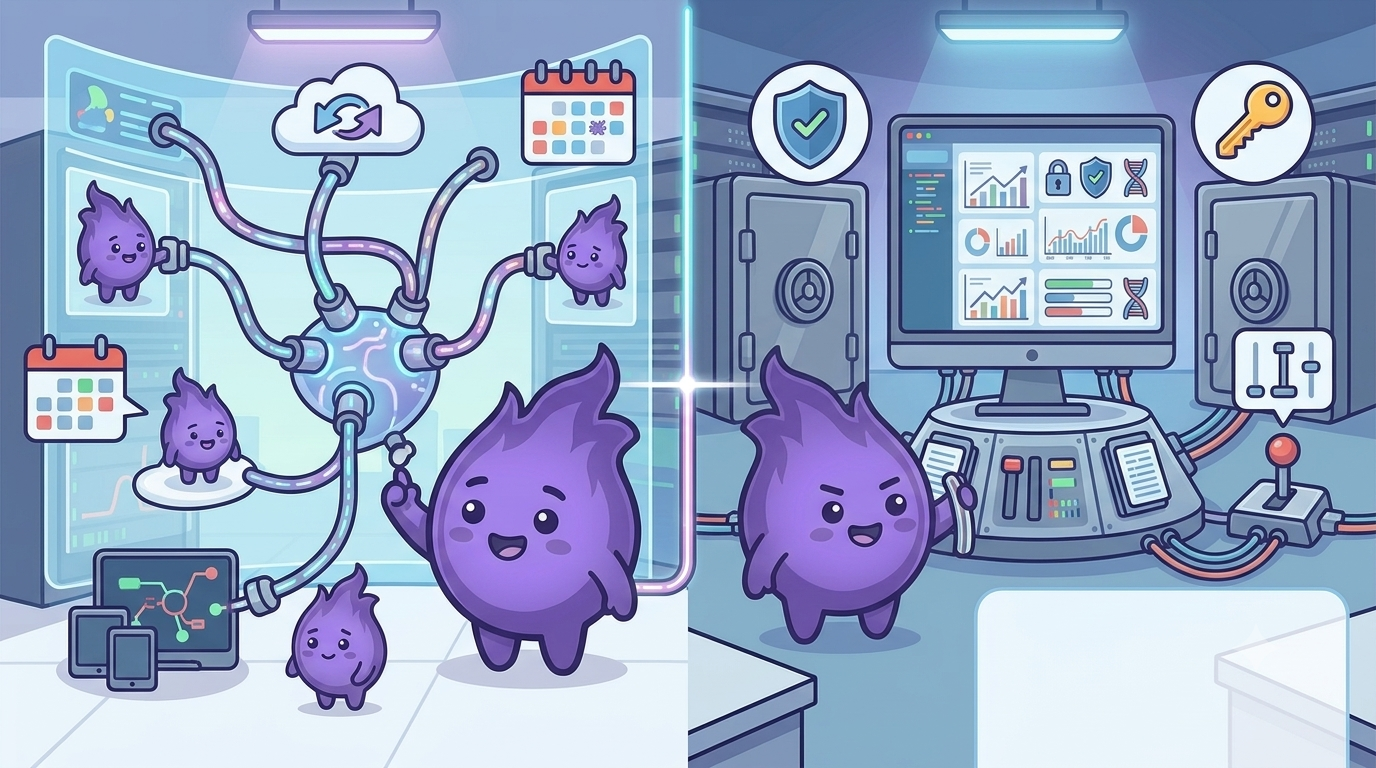
Building flexibility into digital trials without losing control
Flexibility sounds good in theory. It promises adaptability. It makes participation feel more human. But it also introduces risk: protocol deviations, missing data, more complicated monitoring. The challenge in digital trials is building systems that can flex without breaking.
This is not purely a technical problem. It is a design mindset. Most trial platforms are built to enforce consistency, and that is important. But consistency is not the same as rigidity. The goal is not perfect uniformity. It is managing variation without losing track of what matters.
It's also worth being honest that flexibility isn't automatically a win for everyone in the study. A survey of 355 investigative sites worldwide on the burden of decentralised approaches found that half viewed them as more burdensome than traditional trials overall, not less. The pattern behind that number is instructive rather than discouraging: operational and managerial tasks, like scheduling or document handling, were seen as genuinely less burdensome when done remotely, while clinical procedures and anything requiring direct study-team-to-participant interaction were viewed as more burdensome under a decentralised model. Flexibility helps precisely where you'd expect it to and creates new work exactly where human contact still matters most. Designing for it means being specific about which category a given task falls into, not assuming flexibility is a universal improvement.
Take a common example. A participant misses three days of data entry. In a rigid system, that triggers queries, flags a deviation, or even disqualifies them. In a flexible system, those three days are acknowledged and the participant is guided back in without penalty. A catch-up form is offered. The gap is logged without forcing a resolution.
How to design for flexibility without losing oversight
Start with the architecture. Flexible systems do not happen by accident:
- Use rolling windows instead of fixed deadlines wherever the protocol allows
- Build task logic that adjusts based on completion patterns, not just the calendar
- Separate data quality checks from participant-facing features so reviews happen without interrupting the experience
- Allow mid-study updates to forms or visits without invalidating past entries
Scheduling is another area where flexibility shows up, and it's worth building it into exactly the operational tasks the site-burden survey flagged as easier remotely. Not every participant can complete tasks at the same time each day. A good platform lets users shift task windows slightly, pause participation briefly, or reschedule a video visit without needing a phone call, an email, and a protocol amendment.
Flexibility is not the same as ambiguity
This is worth saying clearly. Participants still need to know what is expected. Staff still need to know what is allowed. A system can offer options without creating confusion. That might mean labelling tasks as "optional" or "recommended" rather than bundling everything under one compliance flag, or giving users feedback when something is skipped so they know what to do next rather than wondering if it mattered.
What about data integrity?
If everyone does things slightly differently, how do you compare? The answer is tracking, not restriction. Log when tasks are done early or late. Note when optional entries are skipped. Monitor patterns. When you know what happened, you can adjust in analysis. When you lock everything down, you may not notice the differences until it is too late.
Flexibility also helps sites, provided it's aimed at the tasks that actually benefit. When coordinators have more control over scheduling or communication cadence, they can adapt to their real workload. That reduces frustration and improves compliance. The same goes for monitors: if systems let them focus on what matters instead of checking every unchanged field, oversight improves. But piling flexibility onto the clinical, human-contact parts of a study without extra support risks recreating exactly the burden increase the site survey found.
And then there are participants. When someone needs to step back for a few days and finds they are still welcome, still useful, still included, they are more likely to return. That sense of inclusion builds resilience into the study.
Digital trials are often sold on efficiency. But efficiency without flexibility creates brittleness, and flexibility applied without discrimination creates a different kind of burden somewhere else. The studies that run smoothly are the ones that know exactly where and how to bend.