
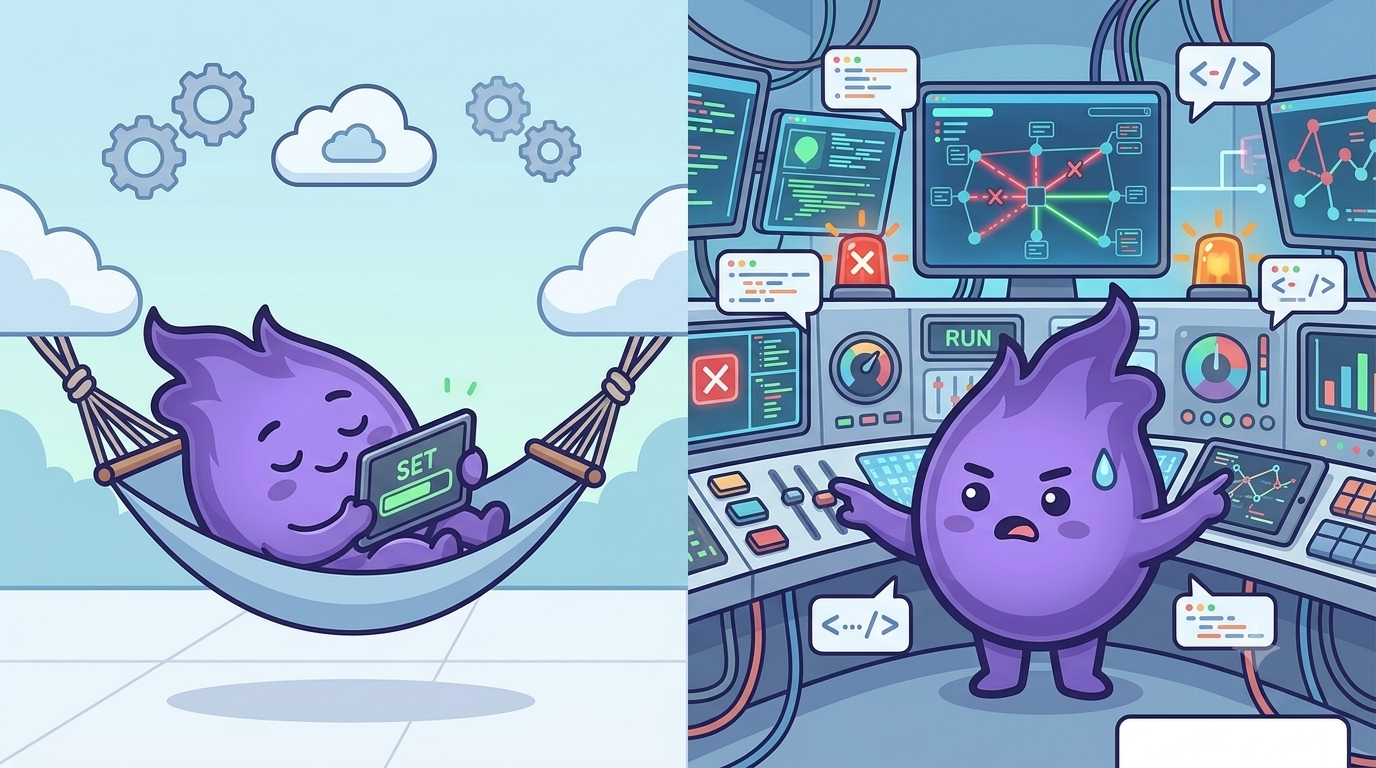
Trial apps and the myth of set it and forget it
There is a common assumption that once a participant-facing app is launched, it becomes a fixed piece of the trial. You build it. You deploy it. You move on. In practice, that is rarely how the best-run studies operate. The most effective apps are treated as living parts of the study: adjusted, monitored, and supported just like any other operational tool.
This isn't only true after launch. A recent co-design study developing a digital tool to help patients taper opioid use after surgery found the same principle applies before a single participant ever opens the app. The team ran iterative workshops with eight post-surgical patients and twelve healthcare professionals, refining the design each round to keep it feasible, usable, and aligned with how care teams actually work. The result was shaped as much by what real patients and clinicians said didn't work in early versions as by what the design team originally intended. An app that never goes through that kind of correction, whether before launch or after, is carrying untested assumptions into the field.
What the launch moment actually looks like
The app goes live. Participants begin using it. Early feedback starts rolling in. Some will struggle with login. Others will not understand why certain questions repeat. A few may use the app perfectly but still submit inconsistent data. All of this is valuable. It is not a sign of failure. It is an invitation to tune the system.
Apps are not just containers for tasks. They are touchpoints. They shape how people feel about participating. If a screen loads slowly, or if reminders arrive at the wrong time of day, it chips away at trust. Fixing these things is not cosmetic. It is part of protecting data quality and retention.
Signs the app needs attention
Over time, usage changes, and a few patterns are worth taking seriously rather than writing off as inevitable drop-off: participants skipping certain tasks more often as the weeks pass, one age group consistently ignoring a particular feature, diary entries becoming increasingly uniform as the novelty wears off, or an operating system update suddenly causing crashes or display issues that were never present at launch. Each of these is the app telling you something specific, and the fix is rarely the same twice. A skipped task might mean the task is poorly timed. A uniform diary entry might mean the question no longer feels meaningful to answer honestly.
A practical review process
Regular app reviews do not need to be complex. A short monthly check can cover:
- Which features are being used, and which are being ignored?
- Which screens show the highest drop-off rates?
- Are reminders triggering the expected behaviour, or are they being dismissed?
- Have any technical issues emerged since the last review?
Some adjustments coming out of this will be technical: a silent update to fix form logic, a correction to a conditional rule. Others will be behavioural: rewording a reminder, moving a task to appear earlier in the day, adding a brief explanation for why a question is being asked. Neither kind of fix requires a full redesign, and both matter equally to whether the app still works for the people using it.
What "set it and forget it" actually costs
The gap between how an app was designed and how it is actually used tends to grow quietly. What works in week one may not work in week twelve. What feels intuitive to one cohort may confuse another, in the same way the opioid tapering tool needed real patient input to catch barriers the design team hadn't anticipated on paper.
This is not a reason to constantly overhaul the experience. It is a reason to stay curious about how participants are interacting with the study. Small, deliberate corrections made along the way tend to be far easier than large interventions made after data quality has already started to drift.
Keeping an app useful is not about adding more features. It is about observing, listening, and adapting, before launch and long after it. When that happens, the app becomes more than a tool. It becomes part of the relationship between the study and its participants.