
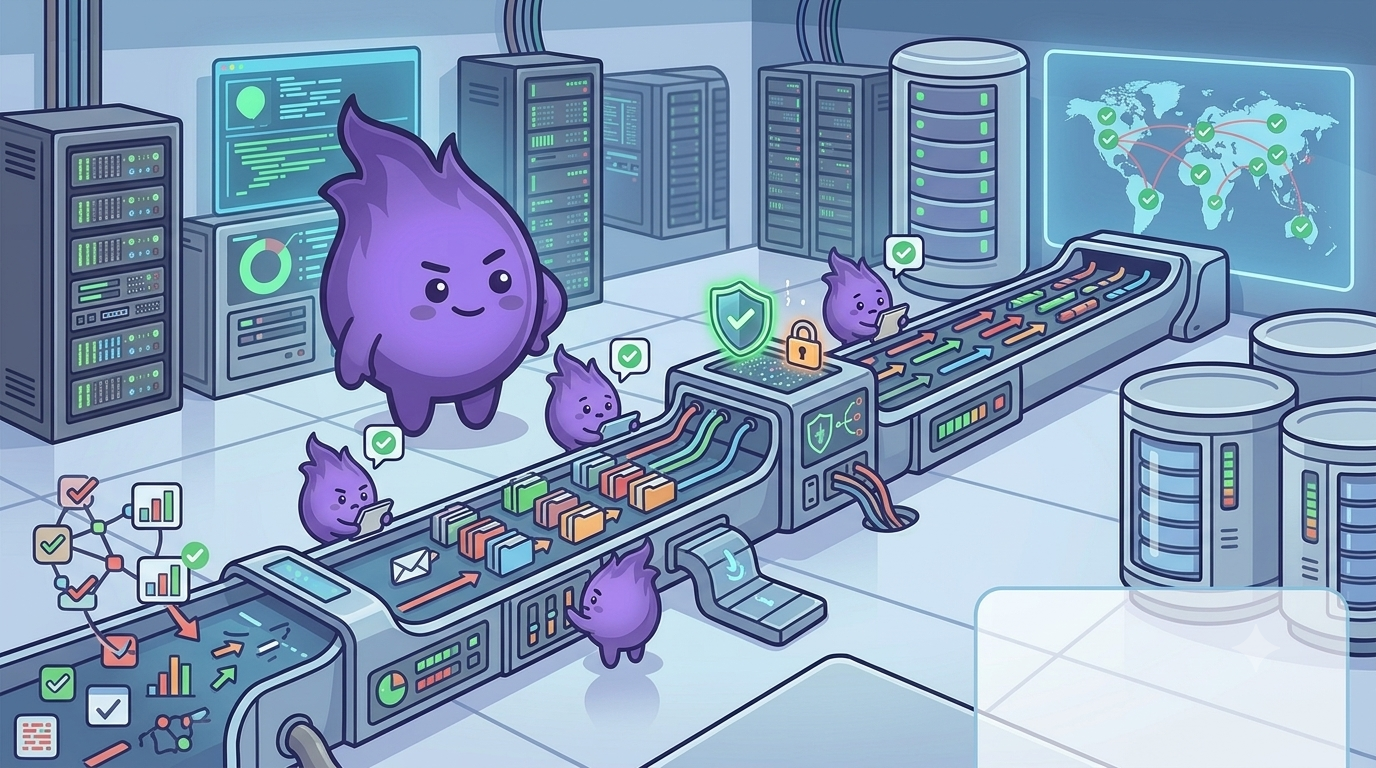
What happens to data after collection
Participants open an app, enter a value, and press submit. Then nothing.
No confirmation. No context. No sense of where that piece of information went or what it means. For many participants, data collection is an act of faith: they do their part, hand it over, and assume something useful happens on the other side.
That assumption is usually correct. But leaving it unspoken is a problem, and it's a bigger problem than most teams assume. A representative survey of 502 US adults found that 84% of participants actively want their health research information returned to them, and that being transparent about both the information itself and how it's used measurably increased trust in research, with the effect varying meaningfully across demographic groups. This isn't a niche preference. It's close to a default expectation that most studies simply aren't meeting.
What actually happens
Here's the honest account of what data goes through after someone submits it:
- Storage. The entry lands in a secure database. Depending on the study, this might be a dedicated EDC, an app back-end, a sponsor environment, or a third-party vendor. Most participants have no idea which.
- Cleaning. Study staff or monitors review the data for completeness and consistency. Values get flagged. Queries are raised. Some entries get corrected, some get annotated, some get excluded. The number someone typed might look different by the time it reaches analysis.
- Review. Depending on the study structure, the data might pass through a CRO, a central monitor, a statistician, or a sponsor team. Multiple people make decisions about what it means and whether it's usable.
- Locking. Once the dataset is finalised, it gets locked. That version becomes the record, with no further changes. The participant's contributions are now fixed in time.
- Analysis and reporting. The data is aggregated, patterns are identified, and results are written up for regulators, journals, or internal stakeholders. At this point, the individual participant has completely disappeared. Their numbers exist, but there's no face attached.
At no point in this process does anyone call the participant to say "your data made it."
Why this matters more than teams realise
Participants don't need to understand data pipelines. But they do need to feel that their involvement went somewhere meaningful. When they don't get that feedback, they start to question why they're doing it. Repetitive tasks feel more tedious. Motivation dips. And the longer the study runs, the more likely they are to quietly disengage.
There's also an accuracy effect. Participants who understand what their data is used for tend to take more care with it. They're more honest about missing entries. They're more likely to flag unusual symptoms rather than dismiss them.
What participants deserve to know
This doesn't require detailed technical disclosure. It requires basic human communication:
- Who sees their data (roles, not names)
- Whether it leaves the organisation and under what conditions
- How long it's kept, and what happens to it after the study ends
- What their contribution actually influenced
That last one is the most neglected. A sentence at the end of a study ("your symptom logs helped us identify three patterns we hadn't anticipated") is low effort. The impact on participant satisfaction is not.
How you deliver that matters too, not just whether you do. A companion study using the same 502-person sample found email was the most preferred format for receiving research information (67%), ahead of a website (44%) or a paper copy (32%), though preference shifted noticeably by age: roughly a third of younger participants preferred a mobile app, against barely one in ten of the oldest generation surveyed. There isn't one right channel. There's a case for offering more than one and letting the participant's own preference decide, rather than defaulting to whatever's easiest for the study team to produce.
Post-study summaries, brief infographics, a link to a published abstract: these are small gestures. But they close a loop that, for most participants, has been open since they hit submit on day one.
Data collection is not the end of the relationship. For the people who contributed, it rarely feels that way either. Treat the data journey as something worth explaining, and you'll find participants who are more engaged, more careful, and more willing to come back.